Best Gaming Laptops Under £1,000 in 2026
Prices are correct at the time of publication and may have changed since. Click any product link for the latest price.
What Does £1,000 Get You in a Gaming Laptop in 2026?
Quite a lot more than it did two years ago. The sub-£1,000 gaming laptop bracket has improved significantly thanks to NVIDIA's RTX 50 series mobile GPUs and AMD's latest Ryzen mobile processors. You can now get a machine with a current-gen GPU, 16GB of RAM, a 1TB NVMe SSD, and a high refresh rate display without breaking the four-figure barrier.
But there are still compromises at this price. You will not find RTX 5070 or higher GPUs here. Screens tend to be 1080p IPS rather than OLED or QHD. Build quality is functional rather than premium. The question is which compromises matter least for gaming, and which laptops make the smartest trade-offs.
We have combed through the current UK market to find the best options. Every recommendation below is based on real specs, real prices, and real benchmark data from trusted reviewers.
Our Top Pick: ASUS TUF Gaming Laptop with RTX 5050
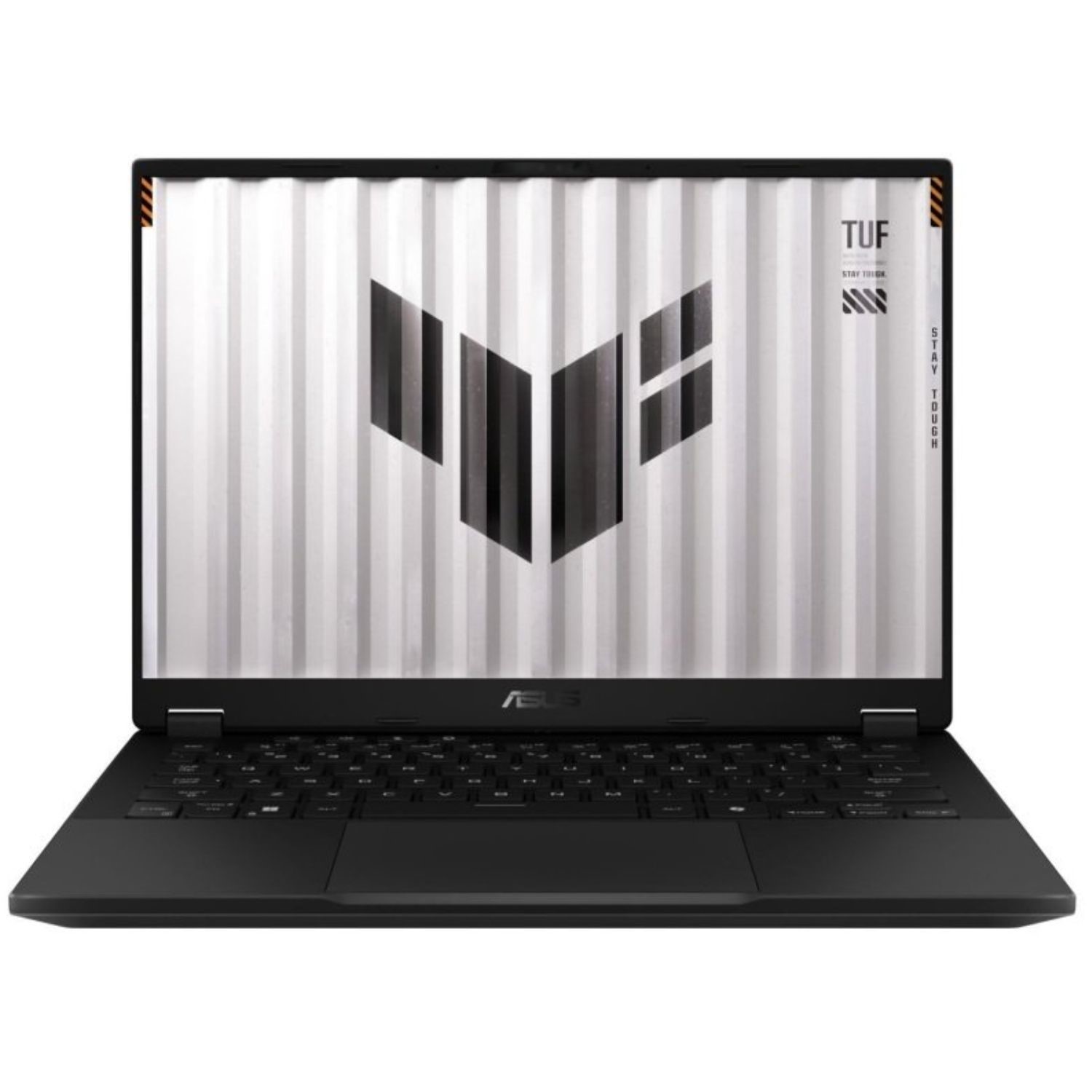
The ASUS TUF AMD Ryzen 7 with RTX 5050 is the standout option at this price point, available from £979.97. It pairs an AMD Ryzen 7 mobile processor with NVIDIA's RTX 5050 laptop GPU, 16GB of RAM, a 1TB SSD, and a 165Hz 14 inch display. That is a properly balanced spec sheet for under a grand.
The RTX 5050 mobile is NVIDIA's entry-level Blackwell laptop GPU. Based on early reviews from outlets like Notebookcheck and Hardware Unboxed, the RTX 5050 laptop delivers roughly 15% to 20% higher rasterisation performance than the RTX 4050 laptop it replaces. In practical terms, expect around 60 to 75 FPS in Cyberpunk 2077 at 1080p with high settings (without ray tracing), and over 100 FPS in lighter titles like Valorant and Counter-Strike 2 at 1080p. With DLSS 4 frame generation enabled, those Cyberpunk numbers can climb above 90 FPS.
The Ryzen 7 mobile chip handles the CPU side capably. In Cinebench R24 multi-thread, Ryzen 7 mobile processors in this class typically score around 800 to 950 points, which is more than sufficient for gaming workloads where the GPU is the bottleneck. It also handles streaming and light content creation without choking.
For under £1,000, the ASUS TUF with RTX 5050 is the best combination of GPU power, storage, and display refresh rate available in the UK right now.
Key Specs at a Glance
| Component | Specification |
|---|---|
| CPU | AMD Ryzen 7 (mobile) |
| GPU | NVIDIA RTX 5050 (laptop) |
| RAM | 16GB |
| Storage | 1TB NVMe SSD |
| Display | 14 inch, 165Hz, 1080p |
| OS | Windows 11 |
| Price | from £979.97 |
RTX 5050 Laptop Performance: What the Benchmarks Show
The RTX 5050 mobile sits on 8GB of GDDR6 memory with a 128-bit bus. That is the same VRAM quantity as the desktop RTX 5060, though the laptop variant runs at lower power (typically 60 to 80W TDP versus 150W for the desktop card). This means you should not expect desktop-class performance, but for 1080p gaming it is well matched.
According to Notebookcheck's early benchmarks of RTX 5050 laptops, the card scores around 12,500 to 13,000 in 3DMark Time Spy Graphics. For context, the outgoing RTX 4050 laptop scored around 10,500 to 11,000 in the same test. That is a roughly 18% generational uplift.
The figures above reflect typical 1080p high-preset performance for an RTX 5050 laptop at around 75W TGP, based on aggregated data from Notebookcheck and Tom's Hardware. Alan Wake 2 is the most demanding title here, and dropping to medium settings or enabling DLSS brings it comfortably above 60 FPS. Lighter esports titles are effortless.
Ray tracing is possible but limited. With RT on medium and DLSS enabled, you will see around 45 to 55 FPS in Cyberpunk 2077 at 1080p. Playable, but not ideal. The RTX 5050 is best treated as a rasterisation card with DLSS as a bonus.
What About Cheaper Options?
If £980 is stretching your budget, there are alternatives below the true gaming laptop threshold that still handle some games. They come with significant GPU compromises, though.
Medion ERAZER Crawler E30
The Medion ERAZER Crawler E30 is available from £599.49 and comes with an Intel Core i5, 16GB RAM, 512GB SSD, and an RTX 2050 GPU. The RTX 2050 is significantly weaker than the RTX 5050. In 3DMark Time Spy, the RTX 2050 laptop scores around 5,500 to 6,000, less than half the RTX 5050's score. Real-world, that means roughly 35 to 45 FPS in demanding AAA titles at 1080p medium settings.
The 60Hz display is another limitation. Even when the GPU can push higher frame rates in lighter games, you will not see the benefit on screen. For competitive shooters where high refresh rates matter, this is a genuine drawback.
That said, if your gaming diet is mostly esports titles, older AAA games, or indie titles, the Medion can handle those. Valorant will run at 80+ FPS at 1080p medium, and games like Civilization VI or Stardew Valley are no issue. At £599.49, it is nearly £400 cheaper than the ASUS TUF. The question is whether those savings are worth roughly half the GPU performance.
Non-GPU Laptops for Light Gaming
Several laptops in the £400 to £550 range ship with integrated graphics capable of handling very light gaming. The ASUS VivoBook 15 with AMD Ryzen 7 (from £419.99) uses Radeon integrated graphics, which can manage around 30 to 40 FPS in older titles like GTA V at 1080p low settings according to Tom's Hardware testing of similar APUs. These are not gaming machines, but they can do double duty in a pinch.
Comparison: Sub-£1,000 Gaming Laptop Options
| Laptop | GPU | CPU | RAM | Storage | Display | Price |
|---|---|---|---|---|---|---|
| ASUS TUF (RTX 5050) | RTX 5050 | Ryzen 7 | 16GB | 1TB SSD | 14", 165Hz | from £979.97 |
| Medion ERAZER Crawler E30 | RTX 2050 | Core i5 | 16GB | 512GB SSD | 15.6", 60Hz | from £599.49 |
| ASUS VivoBook 15 (Ryzen 7) | Integrated | Ryzen 7 | 16GB | 512GB SSD | 15.6", 60Hz | from £419.99 |
The gap between the ASUS TUF and the Medion is stark. The RTX 5050 is roughly 2x the GPU of the RTX 2050 in synthetic benchmarks. The TUF also benefits from a 165Hz panel, double the storage capacity, and a newer processor architecture. If gaming performance is your priority and your budget stretches to £980, the TUF is clearly the better investment per pound.
What to Look for in a Sub-£1,000 Gaming Laptop
GPU First, Everything Else Second
The GPU determines your gaming experience more than any other component. A laptop with a strong CPU but weak GPU will still struggle in modern games. At this price, the RTX 5050 is the best discrete GPU you will find. Avoid laptops advertising "gaming" credentials with only integrated graphics or very old GPUs like the GTX 1650.
16GB RAM is the Minimum
Every laptop we have recommended here comes with at least 16GB. Some modern games use 12GB or more, and Windows 11 itself consumes a fair chunk. 8GB is simply not enough for gaming in 2026. All three options above meet this threshold.
Storage: 512GB is Tight, 1TB is Comfortable
Modern game installations are enormous. Call of Duty titles routinely exceed 100GB. Baldur's Gate 3 sits around 120GB. A 512GB SSD fills up fast once you factor in Windows and applications. The ASUS TUF's 1TB drive gives you meaningful breathing room. If you go with a 512GB laptop like the Medion, budget for an external SSD or plan to manage your library carefully.
Display Refresh Rate Matters for Gaming
A 165Hz panel on the ASUS TUF means smoother visuals in fast-paced games, particularly competitive shooters. The 60Hz panel on the Medion caps your perceived smoothness regardless of frame rate. If you play a lot of multiplayer shooters, this difference is noticeable and worth paying for.
Screen Size: 14 vs 15.6 Inches
The ASUS TUF has a 14 inch screen, which is smaller than the typical 15.6 inch gaming laptop. Some people prefer the portability; others find 14 inches cramped for immersive gaming. If screen size is a dealbreaker, you might consider connecting to an external monitor. A solid 1080p 27 inch display like the Philips 27E1N1100A costs from £61.99 and gives you a much larger, 120Hz gaming surface at home.
Can You Build a Desktop for Less?
Yes. A desktop with an AMD Ryzen 5 5600XT (from £135.49), a Palit RTX 5060 Dual (from £288.99), and appropriate supporting components would cost around £700 to £800 total and deliver substantially better gaming performance than any laptop under £1,000. The desktop RTX 5060 scores around 17,000 to 18,000 in 3DMark Time Spy Graphics according to TechPowerUp, roughly 35% to 40% higher than the laptop RTX 5050.
But a desktop is not portable. If you need to game on the go, during travel, or simply do not have space for a full tower setup, a gaming laptop is the right call. Just be aware of the performance trade-off.
Peripherals Worth Pairing
A gaming laptop benefits enormously from a decent mouse. The built-in trackpad is fine for desktop tasks, but hopeless for competitive gaming. The Razer Basilisk V3 X HyperSpeed (from £60.22) is a wireless option with a reliable sensor and good ergonomics at a reasonable price.
A headset is also worth considering. The Razer BlackShark V2 X (from £59.99) offers 7.1 virtual surround for under £60, which is hard to beat at this price. Laptop speakers are universally mediocre, so any headset is an improvement.
Our Verdict
The sub-£1,000 gaming laptop market in 2026 has a clear winner. The ASUS TUF with the RTX 5050 at £979.97 is the only option in this bracket that combines a current-gen discrete GPU, a high refresh rate display, 1TB of storage, and 16GB of RAM. It will handle 1080p gaming at high settings in the vast majority of modern titles, and DLSS 4 extends its reach further.
If your budget is closer to £600, the Medion ERAZER Crawler E30 can do light gaming, but the RTX 2050 is a two-generation-old entry-level GPU. The performance gap is enormous, and the 60Hz screen limits the experience further. You are better off saving the extra £380 for the TUF if gaming is a priority.
Below £400, forget dedicated gaming. Integrated graphics will run esports titles at low settings and not much else. Those laptops are productivity machines that happen to play a few games.
Our recommendation: if you want a genuine gaming laptop under £1,000 in the UK right now, the ASUS TUF with RTX 5050 at £979.97 is the one to buy.
FAQ
Is the RTX 5050 laptop GPU good enough for 1440p gaming?
Technically it can output at 1440p, but performance drops significantly. Expect around 40 to 50 FPS in demanding titles at 1440p medium settings. The card is best suited for 1080p. Since the ASUS TUF ships with a 1080p panel, this is not a practical concern for the built-in display.
Can I upgrade the RAM or storage later?
ASUS TUF laptops typically allow SSD upgrades and sometimes RAM upgrades, though some models solder one RAM stick. Check the specific model's teardown before buying if future upgrades matter to you. Notebookcheck and iFixit usually publish teardown guides shortly after launch.
How is the battery life for gaming?
Poor, like every gaming laptop. Expect around 1.5 to 2.5 hours of gaming on battery. For web browsing and light tasks, the TUF should manage 5 to 7 hours. Gaming laptops are meant to be plugged in during heavy use.
Should I wait for RTX 5060 gaming laptops under £1,000?
RTX 5060 laptops are starting to appear but currently sit above £1,200 in the UK. Prices may drop later in 2026, but if you need a machine now, the RTX 5050 at this price is solid value. Waiting is always an option, but there is always something better around the corner.